

By: Yomi Davies Ajayi
From a borrowed bow to a historic medal haul, Team Nigeria's campaign proved that true
champions are measured not only by the medals they win, but by the obstacles they
overcome.
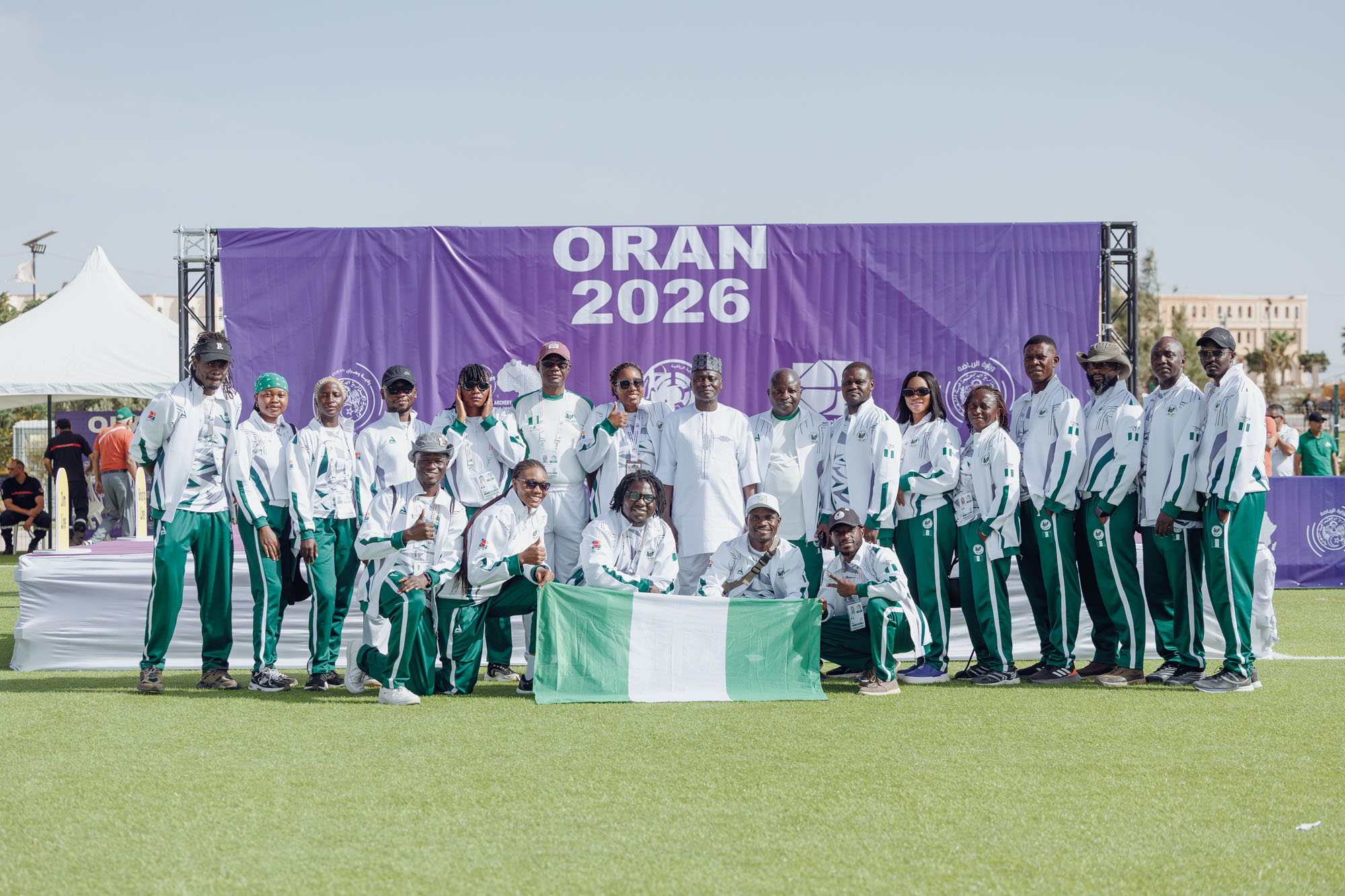
As the curtain falls on the 15th African Archery Championships in Algeria, Team Nigeria
returns home with far more than medals. The delegation leaves the continental stage with
renewed respect, compelling stories of resilience and growing evidence that Nigerian
archery is emerging as one of Africa's most promising forces.
Against some of the continent's finest archers, Nigeria concluded the championship with an
impressive haul of one gold medal, five silver medals and one bronze medal. While the
medal tally reflects technical excellence and months of preparation, it tells only part of the
story. Behind every podium finish were athletes who battled fatigue, logistical setbacks,
equipment challenges and immense psychological pressure to wear the green and white
with pride.
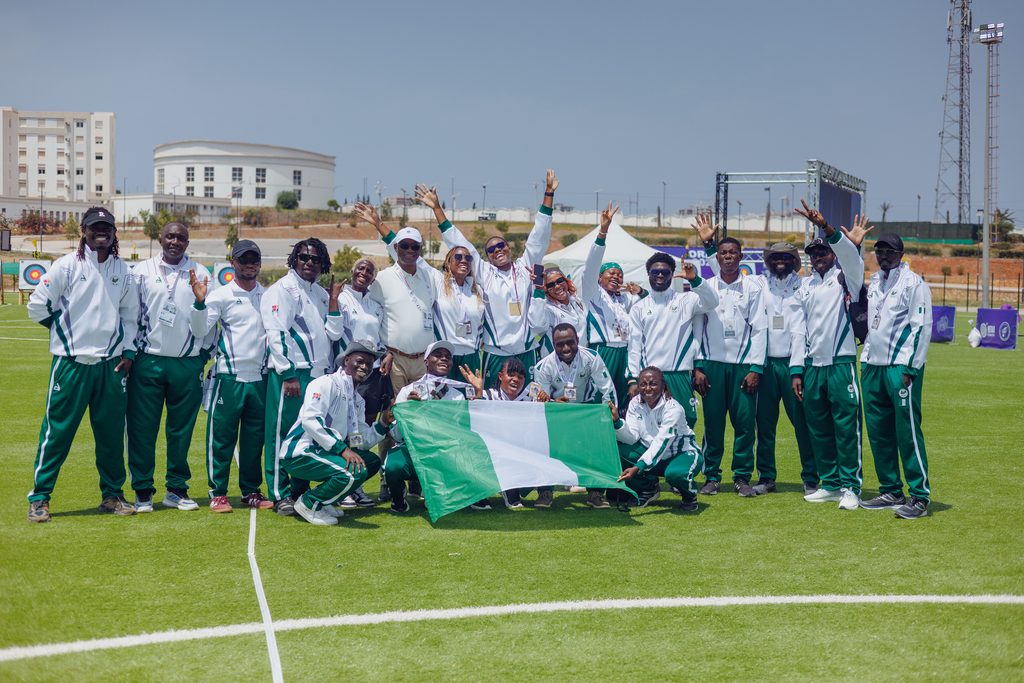
For many observers, the championship will be remembered not only for Nigeria's
seven-medal haul, but for one extraordinary story that encapsulated the spirit of the team—a
story of determination that unfolded long before the first arrow was released.
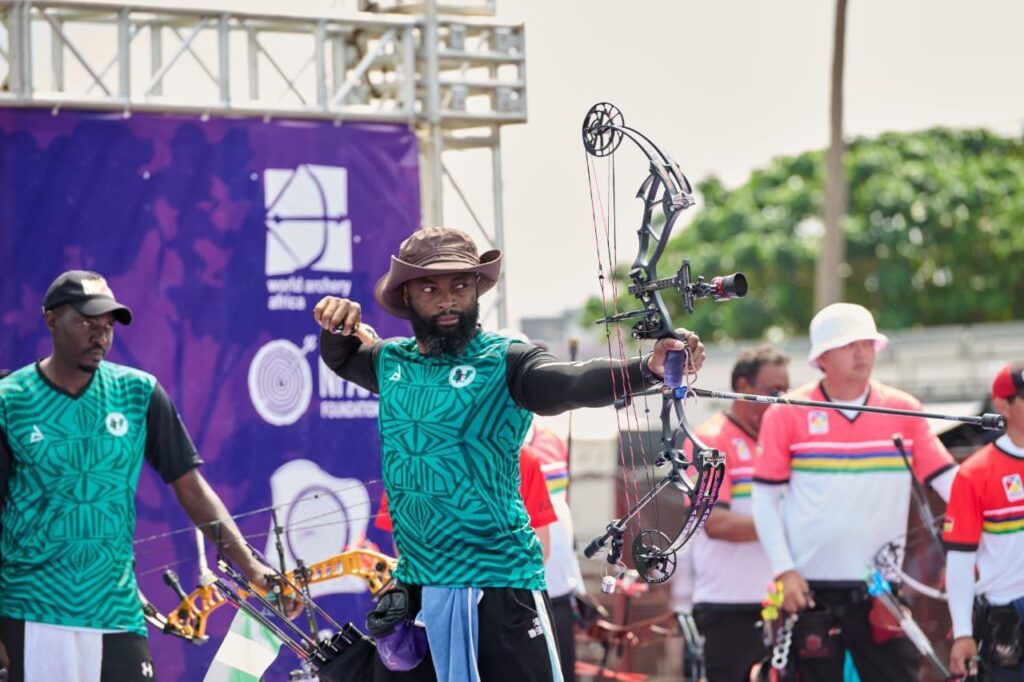
For Oyo State-born compound bow archer Sholademi Damilola Bartholomew, the African
Championships became a test not only of skill but of endurance, resilience and mental
strength. Beyond competing at the highest level, Bartholomew carried the dual responsibility
of serving as Team Nigeria's National Team Manager and Head Coach of the Oyo State
Archery Association, providing leadership on and off the field. His credentials extend
beyond Nigeria, as he is currently ranked the No. 2 compound archer in Massachusetts,
USA, a testament to his calibre and consistency on the international circuit.
Widely regarded as Nigeria's most decorated compound bow archer, Bartholomew has
spent years flying the nation's flag at international competitions, consistently representing
Nigeria with distinction while helping to elevate the country's reputation in the sport. His
journey mirrors the remarkable rise of Nigerian compound archery over the past decade.
Readers will recall that Sholademi Damilola Bartholomew, Tayo Olasehinde, Rotimi
Williams and Kachollom Enyenihi formed the pioneering generation of Nigerian compound
bow archers who secured the country's first international medals in the discipline. Their
groundbreaking achievements ignited the renaissance of compound archery in Nigeria,
laying the foundation upon which today's generation continues to build.Yet in Algeria, Bartholomew's greatest opponent was never another archer.
It was circumstance.
Before competition even began, his customised compound bow—arguably the single most
important tool of his profession—failed to arrive with him after being misplaced by the airline
during transit.
Unlike many sporting implements, a compound bow is not interchangeable equipment.
Every professional compound bow is individually calibrated to its owner. Draw weight, draw
length, peep sight alignment, release timing, stabiliser balance and sight marks are
painstakingly adjusted over months, sometimes years, until they perfectly match the athlete's
shooting style. Even the smallest variation can dramatically alter arrow grouping and
accuracy.
To ask a compound archer to compete with someone else's bow is akin to asking a Formula
One driver to race in another team's car without practice, or expecting a professional golfer
to contest a major championship using borrowed clubs assembled only hours before tee-off.
Yet that was precisely the challenge confronting Bartholomew.
Determined to recover his equipment before competition, he embarked on an exhausting
13-hour road journey from Oran to Algiers Airport after learning his bow had not arrived.
When he reached the airport, officials informed him they could not locate the equipment.
With no alternative, he made the equally gruelling return journey, arriving back in Oran at
approximately 4:00 a.m., physically drained and emotionally exhausted.
Only after he had completed the return trip did the airline contact him.
His bow, they now claimed, had been found.
But there was another obstacle.
He would have to return personally to collect it.
By then, competition was only hours away.
There was no realistic opportunity to retrieve the equipment.
As this report is being written, Bartholomew's bow had still not been returned to him.
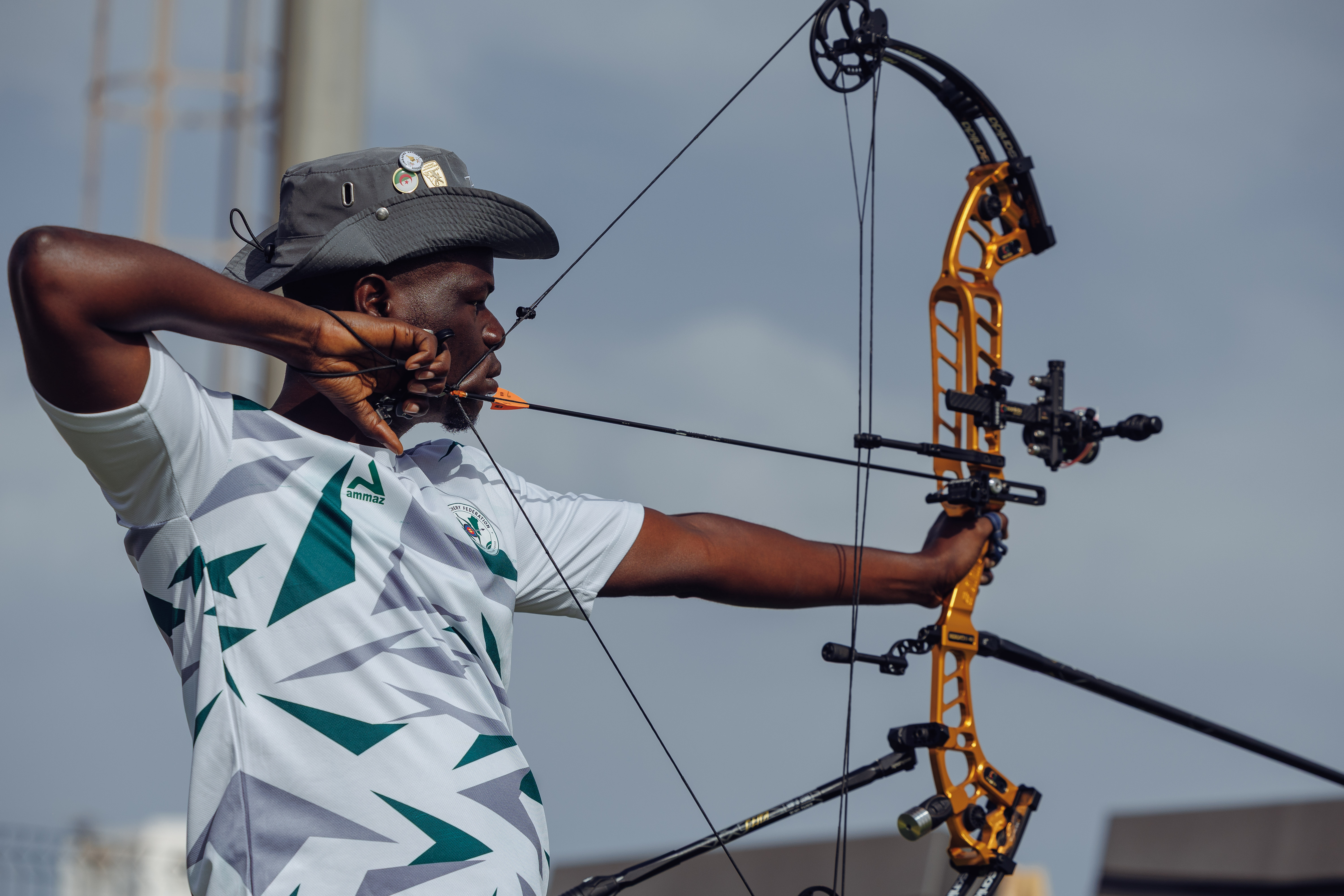
Less than an hour before stepping onto the shooting line, he borrowed another competitor's
compound bow—an unfamiliar setup that he had virtually no time to adjust or practise with.
Despite the fatigue, the disappointment, the lack of sleep and the enormous technical
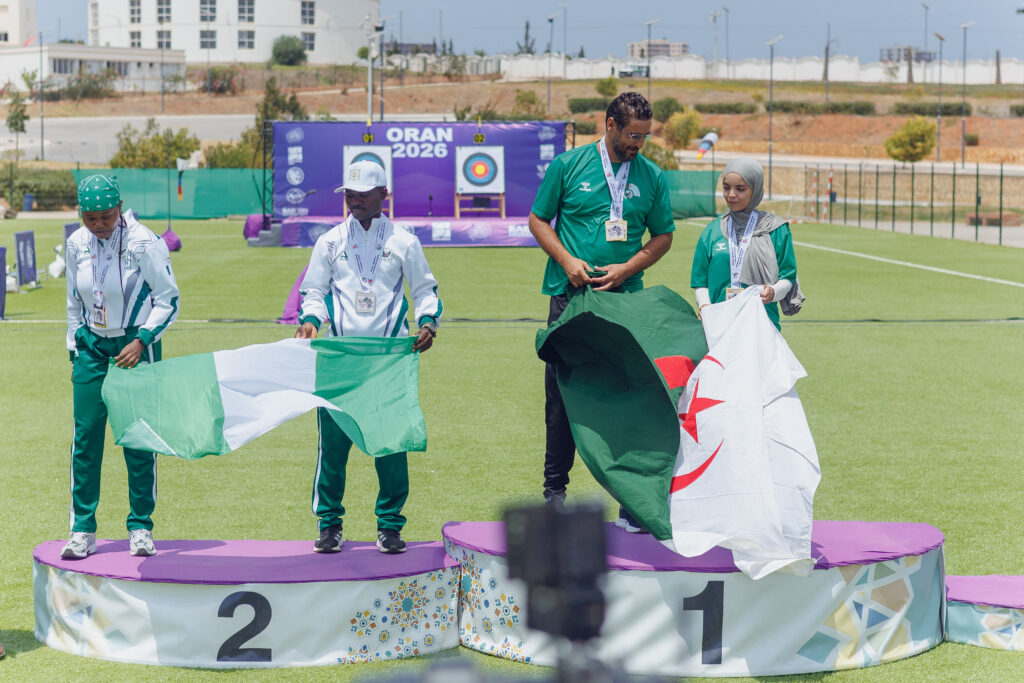
disadvantage, Bartholomew delivered.Together with Team Nigeria captain Aliyu Abubakar and Oyeleke Seun Emmanuel, he
inspired Nigeria to the Compound Men's Team Silver Medal, narrowly missing out on gold.
In elite sport, medals are often measured in millimetres.
At the African Championships, one of Nigeria's finest performances was measured in
courage.
If resilience defined Nigeria's campaign, consistency found its finest expression in
Adekogbe Faith.
The barebow specialist emerged as one of the championship's most decorated Nigerian
athletes, playing an instrumental role in virtually every major barebow success recorded by
Team Nigeria.
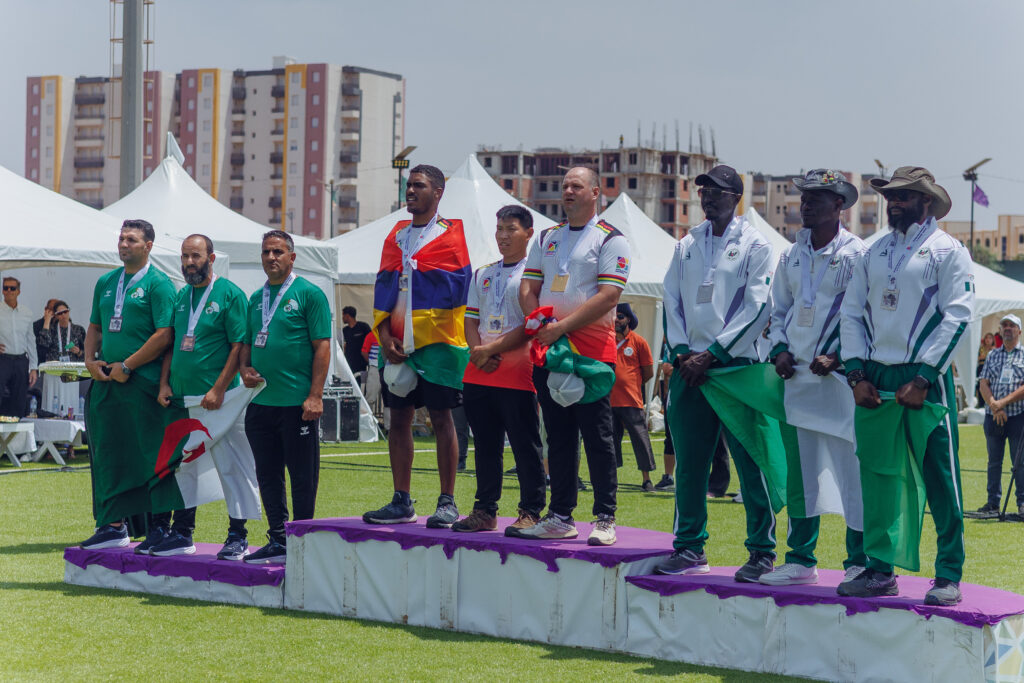
She anchored the women's team to a historic gold medal, demonstrating composure and
precision under pressure alongside teammates Eteidung Mandu and Fanny-Amun
Precious.
Her performances did not end there.
Faith added a silver medal in the Individual Barebow event, confirming her status among
Africa's elite female archers before partnering Usman Abubakar to another silver medal in
the Mixed Barebow Team competition.
Winning three medals across multiple categories requires more than technical excellence. It
demands consistency across different competitive formats, emotional discipline and the
ability to recover mentally and physically between events.
Her performances have established her as one of Nigeria's leading figures in barebow
archery and an athlete whose future appears increasingly bright on the continental stage.
Nigeria's campaign highlighted encouraging progress in two distinct areas.
The country's dominance in barebow events continues to grow, suggesting that years of
grassroots development and athlete identification are beginning to bear fruit.
Equally significant was Nigeria's growing competitiveness in compound competition, one of
the sport's most technically demanding disciplines.
The Compound Men's Team and Compound Mixed Team both reached the podium despite
the considerable equipment adversity experienced before competition.
Such performances suggest that Nigeria is steadily closing the gap on Africa's traditional
archery powerhouses.
The results also reflect the growing quality of coaching, improved athlete preparation and
increasing exposure to international competition. Bartholomew's ability to balance the
demanding responsibilities of competitor, national team manager and state coach while stillproducing a medal-winning performance exemplifies the leadership culture that is beginning
to define Nigerian archery.
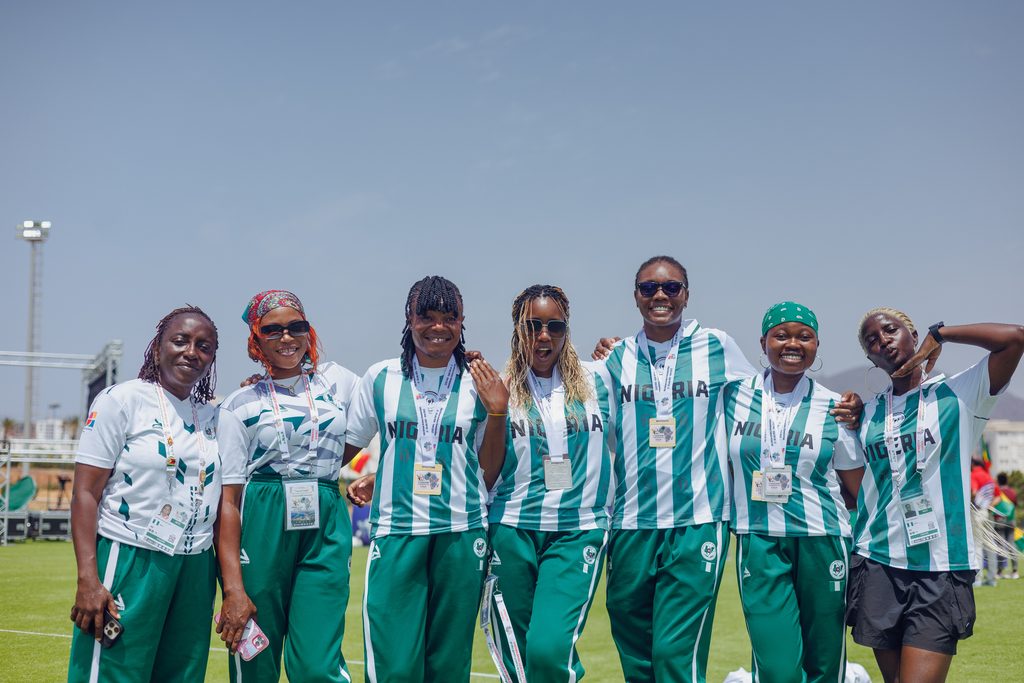
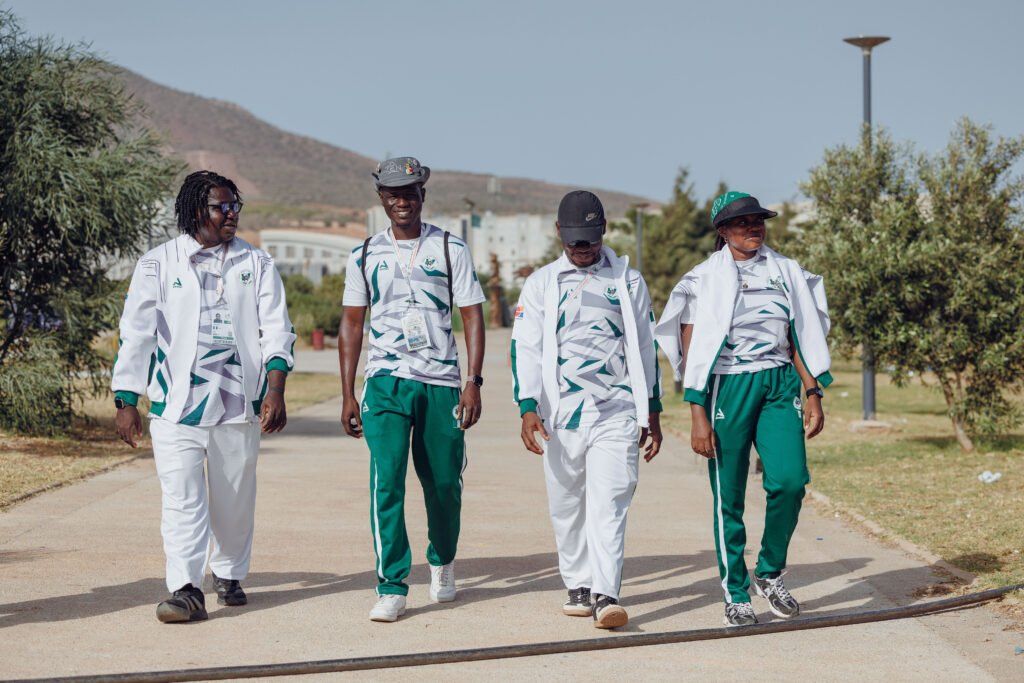
Credit must also be given to the leadership within the team. Under the captaincy of Aliyu
Abubakar, Team Nigeria displayed unity, discipline and unwavering belief throughout the
championship. His leadership, combined with the experience of senior athletes and the
determination of emerging talents, helped sustain the team's competitive spirit despite
significant adversity.
While there remains considerable room for improvement, particularly in high-performance
infrastructure and access to specialised equipment, the trajectory is unmistakably positive.
The 15th African Archery Championships also offers an important lesson for Nigerian sport.
Success at this level cannot rely solely on individual sacrifice.
If Nigeria is to establish itself consistently among Africa's elite and eventually compete
regularly on the Olympic stage, greater institutional support will be essential.
Investment must extend beyond competition attendance.
Athletes require access to world-class training facilities, modern equipment, sports science
support, international exposure and reliable travel arrangements that minimise avoidable
disruptions.
Improved athlete welfare, stronger sponsorship partnerships, expanded youth development
programmes and sustained government investment will ensure performances like those
witnessed in Algeria become the standard rather than the exception.
Nigeria has already demonstrated that the talent exists.
The next challenge is creating an environment in which that talent can flourish consistently.
History will record that Nigeria concluded the 15th African Archery Championships with one
gold, five silver and one bronze medal.
Those numbers deserve celebration.
Yet the true legacy of the championship lies beyond the podium.
Every milestone achieved in Algeria stands on the shoulders of those who dared to believe
Nigerian compound archery could compete beyond its borders. The achievements of today's
national team are part of a journey that began with pioneers such as Sholademi Damilola
Bartholomew, Tayo Olasehinde, Rotimi Williams and Kachollom Enyenihi, whose
historic international medals announced Nigeria's arrival in compound archery. Their
achievements transformed what was once an emerging discipline into one capable of
producing continental medallists and international contenders.
It lies in an exhausted archer driving through the night in search of equipment that never
arrived in time.It lies in Nigeria's most decorated compound bow archer, a national team manager and state
coach, stepping confidently to the shooting line with borrowed equipment and refusing to
surrender.
It lies in a captain who inspired his teammates, athletes who trusted one another, and a
delegation that continued to compete with unwavering belief despite challenges that many
spectators would never see.
In Algeria, Team Nigeria did more than collect medals.
They demonstrated resilience under pressure, unity in adversity and excellence in
competition.
As the nation celebrates another significant milestone, one truth stands clear: while medals
recognise performance, character defines champions. The success recorded in Algeria was
not born overnight; it is the product of years of sacrifice by pioneering athletes, dedicated
coaches, committed administrators and a new generation determined to take Nigerian
archery even further.
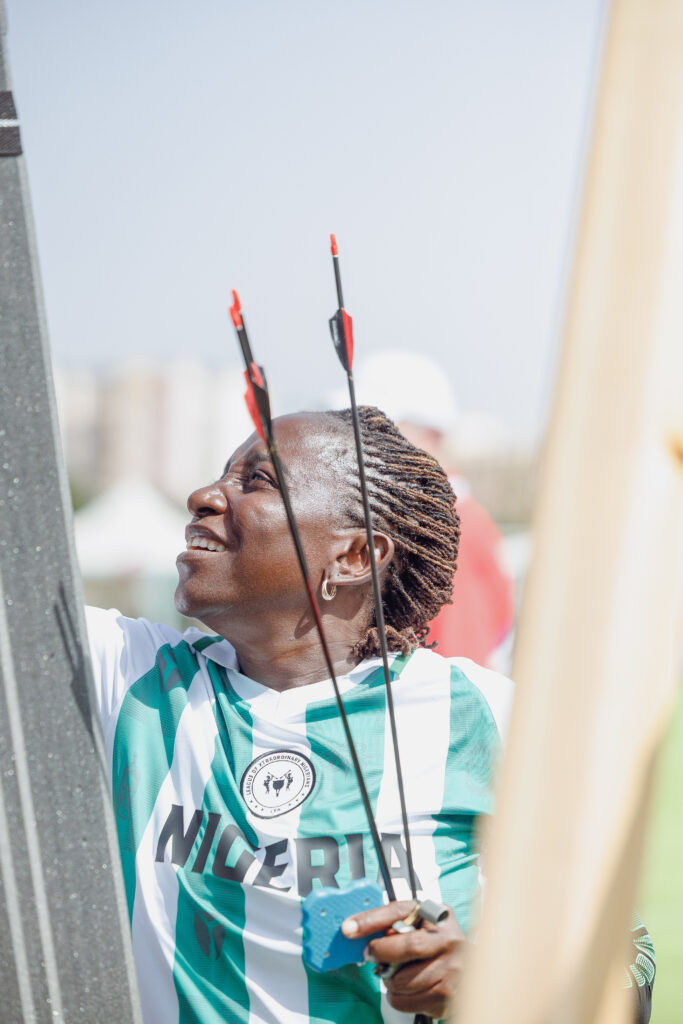
The renaissance that began with a handful of visionary compound archers has evolved into
a national movement. If properly supported, the performances witnessed at the 15th African
Archery Championships may one day be remembered not as the peak of Nigerian archery,
but as another significant milestone on the country's journey towards becoming one of
Africa's enduring archery powerhouses.